
Machines have changed how we talk before. When the telephone arrived, there was no agreed way to start a call. Alexander Graham Bell wanted people to say “ahoy”. Thomas Edison pushed for “hello”, the operating manuals told people to say it, and the phone did a lot to make “hello” the everyday greeting it is now (Mental Floss).
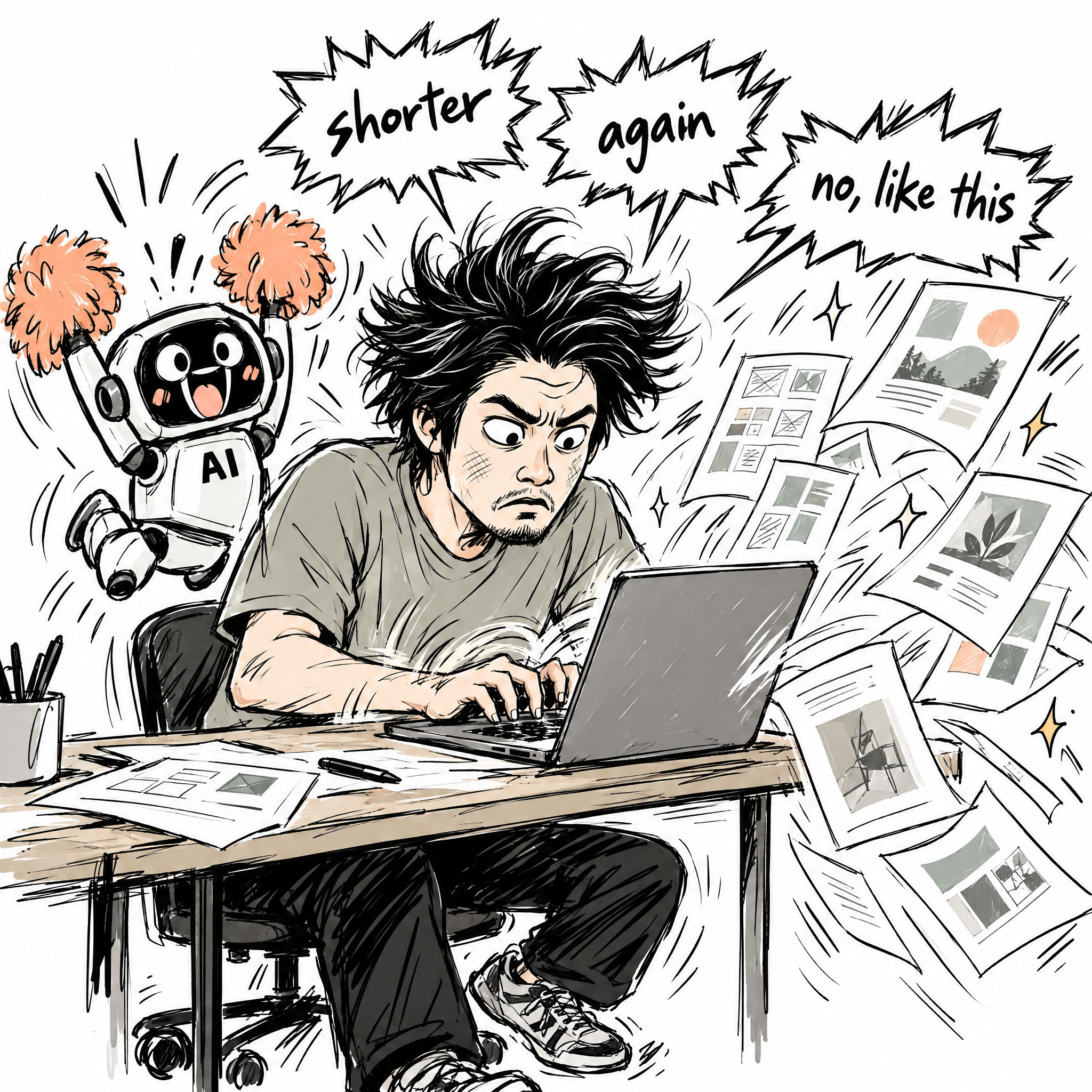
AI is the newest thing people talk to all day, and it’s made for commands. You can type “shorter”, “again” or “no, like this”, with no good morning and no thanks, and it never minds. There’s no need to be kind, and sometimes kindness doesn’t even help. In a small 2025 study at Penn State, ChatGPT answered multiple-choice questions slightly more accurately when the prompts were very rude (84.8%) than when they were very polite (80.8%) (Dobariya and Kumar). The study tested one model on fifty questions, so I wouldn’t build a rule on it, but it does show that with AI, bluntness costs nothing.
The question is whether hours of giving orders to a machine change how people talk to each other. Parents asked it years ago, when smart speakers moved into family homes. They worried their children were learning bad manners from bossing Alexa around, and in 2018 Amazon and Google both added settings that thank children for saying “please” (TechCrunch). Now the same question applies to anyone who gives AI orders all day.
When I first came across this question, I recognised myself in it straight away. I work with AI every day now, and lately I’ve noticed I have less patience for the slower, human parts of the job, and I’m quicker to be blunt. My first thought was that AI was changing me.
The longer I thought about it, the less I believed it. I was blunt long before I typed my first prompt. I’m direct by nature, I put efficiency first, and I’ve never enjoyed small talk. Before AI was part of my day, my direct feedback had upset a few people, and I hadn’t seen it coming.
The clearest study I found points the same way. In a 2021 University of Washington study, children aged five to ten learned a made-up word, “bungo”, to hurry along a voice assistant that spoke too slowly (ScienceDaily). Most of them later tried it on a parent, laughing, as a game, and very few used it with a stranger. The lead researcher, Alexis Hiniker, said afterwards: “I have more confidence after running this study that kids will do a good job of differentiating between devices and people.” I suspect most adults can tell the difference too.
I think AI rewards the habit and hands it an excuse. With AI there’s no ego, no feelings and no workload to think about. I can be as blunt as I like and the work still comes back finished in minutes. After a day of that, it’s easy to carry the same mode into a message to a colleague without noticing. Next to the speed of AI, anything that needs time, context or a kinder word can start to feel like friction.
If you work with AI all day, these are the signs I’d watch for, because they were mine. My messages to people started to read like prompts: short and all instruction. Small talk felt like a cost I could now measure, because I could see how much I’d get done in the same time. And I noticed I rarely wondered how anyone’s day was going. From the inside, all of it felt like being efficient.
At work, the cost of bluntness is mostly quiet. People rarely say a message stung. They take it, get on with the job and remember it, so “nobody complained” isn’t the same as “no harm done”. Bluntness lands harder in writing. What I mean doesn’t come through in an email, but who I copy in does. In one study, asking strangers for a small favour in person got a yes about 34 times more often than asking by email, largely because of the cues we lose in writing (Roghanizad and Bohns).
The cost grows the more your work depends on other people. The habits that help you get things done on your own, like speed, directness and a low tolerance for waste, are the same habits that get in the way once most of the work happens with people. I’m learning people skills alongside the technical ones, slowly.
AI can already write warm, attentive messages, so I’ve wondered what’s left for people. A 2025 study in Nature Human Behaviour showed people identical caring messages and told some that a person had written them and others that AI had (Rubin and colleagues). Across nine experiments with more than 6,000 people, the messages were rated as more caring and more authentic when people believed a person wrote them, and even knowing that AI had helped a person lowered the rating. To me that says the attention behind the words matters more than the words themselves, because someone chose to spend it on you.
So I’m trying a few small things. None of them needs a new tool, and you could start any of them this week:
- Before I send anything I’ve made with AI, I pause for about ten seconds and ask: if I were them, getting this, with these people copied in, how would I feel?
- When I find problems in someone’s work, I tell that person first, before anyone else sees them, and ask how long a fix would take.
- I keep harder conversations for a call or for when we’re in the same room, where my face and tone can carry what the words can’t.
- When I’m with colleagues in person, I talk with them instead of working quietly at my desk.
Small talk still doesn’t come naturally to me. I grew up in a culture where we either get straight to the point or go deep, and the light back-and-forth of an Australian office has never felt easy. But I’ve come to see that caring about people and small talk aren’t the same thing. In a set of experiments with more than 1,800 people, conversations between strangers went better than they expected, deep ones included, and people underestimated how much the other person would care about what they shared (Kardas, Kumar and Epley). For someone like me, a real question might be an easier way in than talk about the weekend.
I’m still working on my bluntness, and I suspect I’m not alone. If you spend your days giving AI instructions too, it might be worth rereading the last few messages you sent to people.

